
Research, Food Security and Rural Jobs at Risk: Stakeholders Deliver Clear Message to Ottawa on Nappan Closure
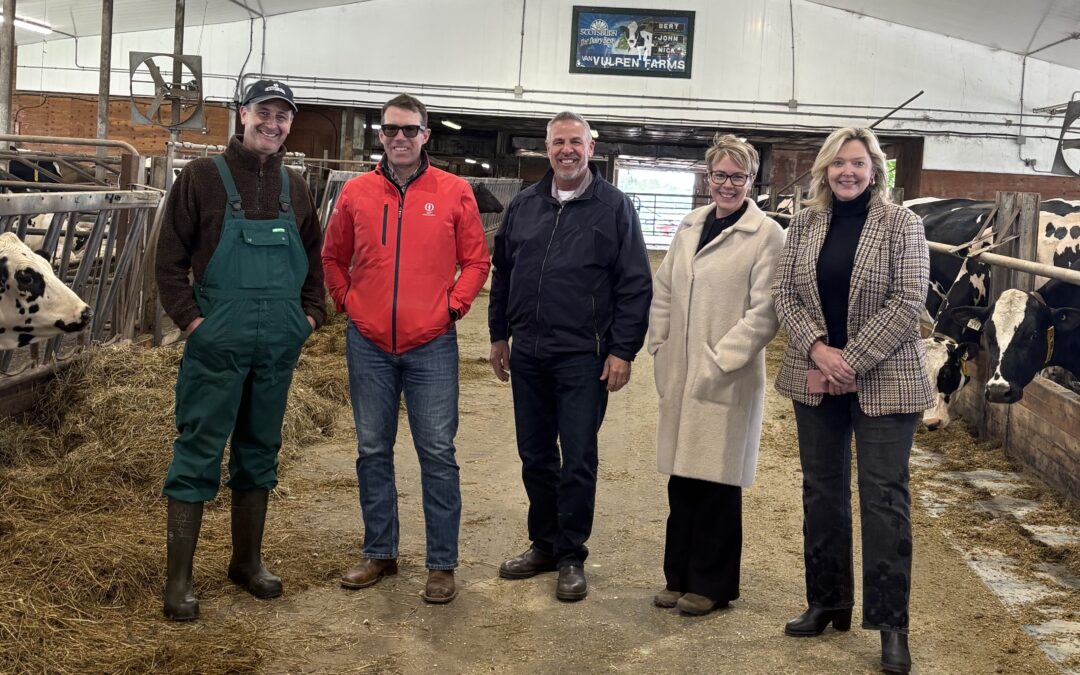
AMHERST, NS, May 31, 2026 – Federal opposition MPs John Barlow, Shadow Minister for Agriculture and Agri-Food, Dave Epp, and Carol Anstey were in Cumberland County yesterday for a full day of meetings and site visits focused on the proposed closure of the Nappan Experimental Farm.
The visit included a private stakeholder roundtable, a tour of the Maritime Beef Test Station, a visit to the Nappan Experimental Farm, and a standing-room-only public meeting. Producers, agricultural stakeholders, community members, and students shared concerns about the proposed closure and its impact on research capacity, food security, rural communities, and the future of agriculture in Atlantic Canada.
“Saturday’s turnout demonstrated just how important Nappan is to this community and to Atlantic Canadian agriculture,” said Cumberland North MLA Elizabeth Smith-McCrossin. “What we heard was not sentiment. It was evidence. Nappan is a nationally significant research asset, and its loss would have consequences far beyond Cumberland County.”
Speakers highlighted Nappan’s 137-year history and its role as the last federally owned cow herd and livestock research program in Atlantic Canada. Discussions focused on the farm’s contributions to livestock genetics, forage development, methane reduction research, carbon sequestration, animal health, soil management, climate adaptation, and food security.
Federal representatives were surprised to hear that all bulls from the Nappan herd have already been sold and that breeding has been halted as part of the closure process. Those in attendance revealed that this is the dismantling of the last federally owned cow-calf herd in Atlantic Canada, a herd that traces its origins back to 1886 and has been selected and adapted to this region over generations. Once this herd is culled, it cannot be rebuilt.
Stakeholders repeatedly emphasized that Nappan’s methane reduction research is producing practical results for producers and the environment. Studies conducted through agricultural research programs have demonstrated methane emission reductions of up to 20 percent through improved feeding strategies, forage management, and livestock practices. Maintaining this work is critical to helping producers meet sustainability goals while remaining competitive.
“Agricultural research is not one-size-fits-all,” said Smith-McCrossin. “Atlantic Canada’s unique climate, soils, marshlands, and production systems require regionally focused research that cannot simply be transferred to another part of the country.”
Significant concern was also raised regarding the future of the Maritime Beef Test Station, which relies heavily on Nappan’s forage production, land base, feed storage, milling capacity, silage production, and shared infrastructure. Speakers warned that the closure could jeopardize a long-standing model of regional cooperation that has supported the beef industry for decades. As one stakeholder said, by closing the Nappan Experimental Farm, the federal government is “killing two birds with one stone.”
The financial rationale for the closure was also questioned. Although the federal government has framed the closure as a budgetary decision, concerns were raised that Nappan’s finances are amalgamated with Kentville’s, while revenues generated at Nappan, including cattle sales and rental income, flow through that broader structure. Conflicting figures have been provided, raising questions about whether decision-makers have an accurate understanding of the farm’s actual financial position and value.
Concerns were also expressed about the loss of long-term research projects, forage breeding programs, research archives, and livestock genetics developed over generations. Once these resources are lost, they cannot easily be recreated.
One of the most powerful themes of the day was the importance of attracting young people into agriculture. Research stations like Nappan play an important role in developing the next generation of farmers, researchers, veterinarians, and agricultural professionals. Several students spoke with incredible clarity about the unique hands-on experience they have gained through Nappan and how that experience has helped shape their education, skills, and career paths in agriculture.
“Those students were remarkable,” said Smith-McCrossin. “They spoke passionately about the opportunities Nappan has provided and the role it has played in their education. Their presentations were a powerful reminder that this is not only about preserving research capacity today. It is about investing in the next generation of agricultural leaders.”
The visiting MPs committed to bringing Cumberland County’s concerns back to Ottawa and pressing the federal government to reverse the closure of the Nappan Experimental Farm or, at minimum, pause the decision immediately until the full economic, scientific, and agricultural impacts are properly assessed.
Please contact your Member of Parliament and tell them they should be advocating for this decision to be reversed. Our Nova Scotia MP’s and all Atlantic MP’s should not be allowing this closure to happen.