
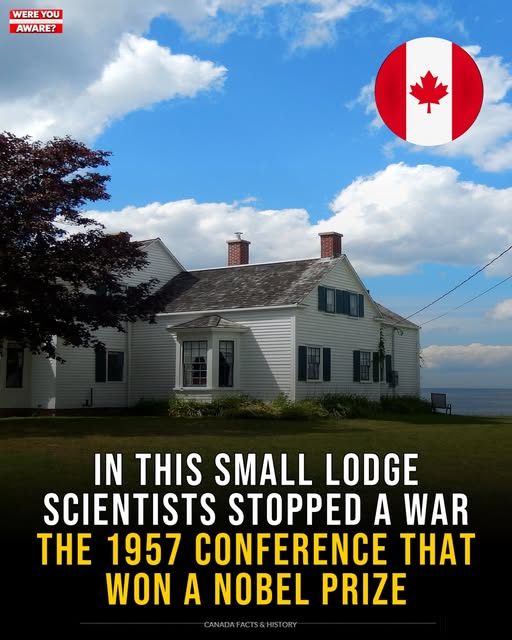
In a modest white lodge in Pugwash, Nova Scotia, a group of scientists sat down in 1957 and tried to stop the end of the world. The first Pugwash Conference on Science and World Affairs brought together twenty-two thinkers from ten countries — East and West, at the height of the Cold War — to confront the horror both sides had built: the hydrogen bomb.
The conference was the brainchild of the Russell-Einstein Manifesto of 1955, in which Bertrand Russell, Albert Einstein, and nine other scientists begged the world’s leaders to remember their humanity before nuclear war made the question moot. Cyrus Eaton, the wealthy industrialist born in Pugwash, offered his birthplace lodge as neutral ground. In that quiet room above the Northumberland Strait, enemies talked — and kept talking, year after year, in Pugwash conferences around the globe.
The movement those 1957 conversations started helped lay the intellectual groundwork for nuclear arms control, from the Partial Test Ban Treaty to the Non-Proliferation Treaty. In 1995, the Pugwash Conferences and co-founder Joseph Rotblat were awarded the Nobel Peace Prize — arguably the most consequential prize ever rooted in a small Nova Scotia town.
Thinkers’ Lodge still stands in Pugwash, a National Historic Site holding the story of a remarkable idea: that the most powerful weapon against war was once just a conversation.
Eaton himself was a paradox worth knowing: a Cleveland financier who never forgot Pugwash, a pacifist with a capitalist’s fortune, a man who believed the rich had a duty to buy peace. He funded the conferences for years, and the lodge — his family’s summer home — became hallowed ground for the scientists who passed through it. Pugwash, population 700, hosted conversations that shaped the fate of billions.
If you could add one voice to that 1957 room, whose would it be?