
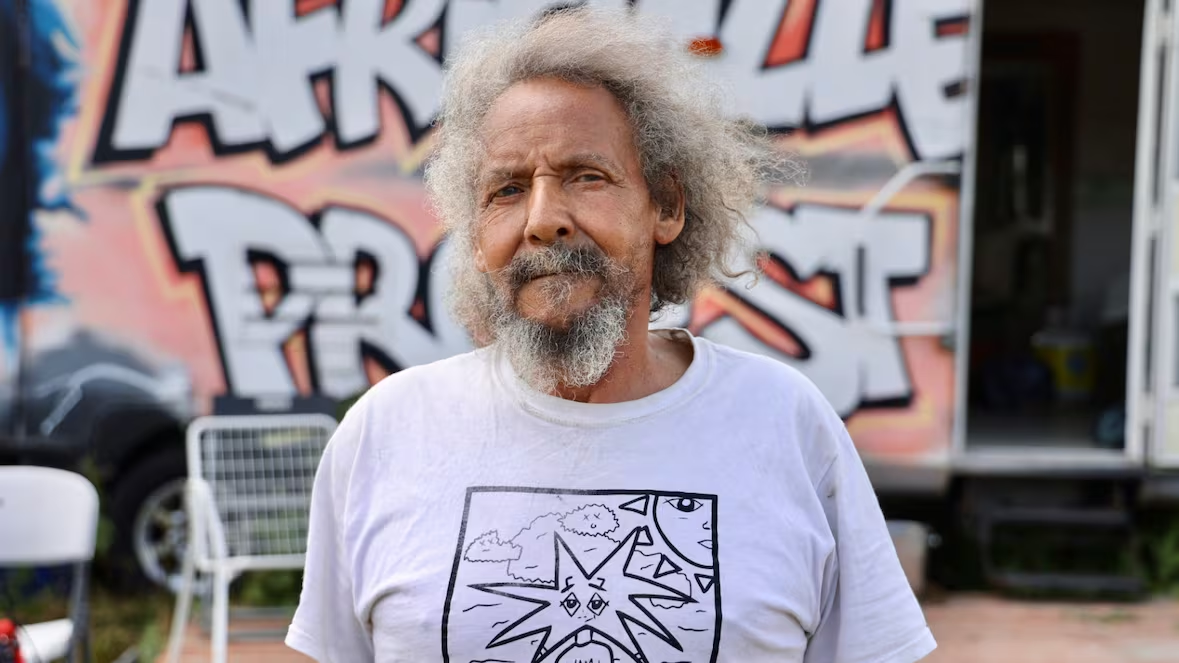
Eddie Carvery, steadfast voice of Africville, dies at 79
Eddie Carvery, a longtime Africville activist who spent more than five decades living in a trailer on the former site of the Black community in Halifax, has died of cancer. He was 79.
Born in Africville in 1946, Carvery became one of the most visible figures connected to the community’s ongoing fight for justice after the City of Halifax bulldozed the neighbourhood in the 1960s following decades of neglect and mistreatment. The destruction cleared the way for industrial development around the Bedford Basin, including infrastructure tied to the MacKay Bridge. For many, Carvery’s presence on the land was an unbroken reminder that Africville was not simply a chapter of the past, but a living history with people still connected to it.
“He was an anchor of memory,” said poet and activist El Jones, describing Carvery’s protest trailer as a place people were taken to understand that Africville’s story and its community ties endured.
Carvery began his protest in 1970, taking up residence on what was then called Seaview Park. His demands were consistent for decades: individual financial compensation for former residents and restoration of the land to them. While some Africville residents who held deeds received compensation based on market value, many others—who did not have formal deeds—were given $500, a detail often cited as emblematic of the broader injustice.
Despite repeated eviction orders—most recently in July 2025—and even the destruction of his trailers in 2019, Carvery continued. In recent years, health issues reduced the time he could spend at the site, and he lived part-time in an apartment, but the protest remained a defining feature of his life and public identity.
His grandson, Eddy Carvery III, said his grandfather’s persistence came from the love he held for the community, even through hardship. He also said he intends to continue the work. “Most people get to inherit some kind of wealth, a home,” he told CBC. “I inherited a duty.”
Carvery’s legacy is also complex. CBC notes he faced legal troubles in the past, including a 1990 Nova Scotia Court of Appeal decision referencing an extensive criminal record dating back to 1964, and a guilty plea that year to aggravated assault against his partner. His grandson acknowledged these realities, saying Carvery was open about his past and had made atonements.
The broader struggle for reparations has continued beyond Carvery’s personal protest. Halifax issued a formal apology in 2010 and pledged $3 million plus a hectare of land to the Africville Heritage Trust. Some former residents and descendants have said that response was not enough, and CBC reports that some former residents are currently suing the municipality, seeking damages and individual compensation related to the community’s destruction.
A public funeral for Carvery is expected in the coming weeks at New Horizons Baptist Church on Cornwallis Street, according to his grandson.
Source: CBC News, “’He was a man on a mission’: Eddie Carvery remembered for keeping memory of Africville alive” (Feb. 15, 2026) — CBC