
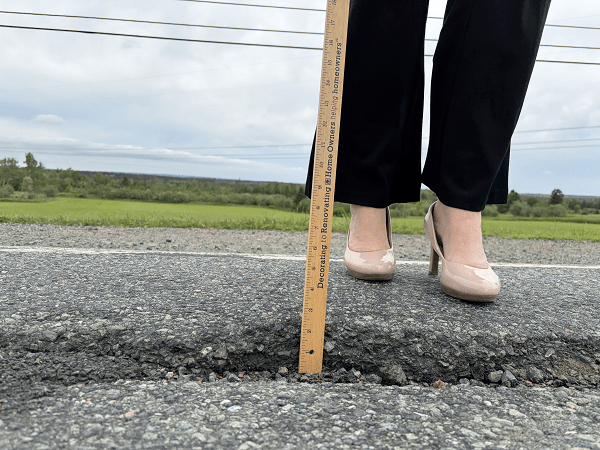
A projected 35 per cent reduction in asphalt work could leave deteriorating roads unrepaired and increase safety risks across rural Nova Scotia unless the Tim Houston government acts immediately, Cumberland North MLA Elizabeth SmithMcCrossin warned today. The Nova Scotia Road Builders Association recently shared its concerns about the lack of road work in Nova Scotia this year. Contractors entered the 2026 season expecting capital program volumes comparable to 2025; however, they have seen a huge reduction in road work.
Earlier this year, this government cut the 80-20 Rule from the Trucking Association of NS and the Department of Public Works encouraged the Roadbuilders Association to work with the TANS “in anticipation of a busy construction season.” By mid-July of 2026, only 59 asphalt tenders had closed, 21 per cent fewer than the 75 that had closed a year earlier. About 408,000 tonnes of asphalt had been tendered, 27 per cent below the five-year average of approximately 560,000 tonnes for the same point in the season. The Roadbuilders Association projects that asphalt work could decline by between 250,000 and 300,000 tonnes this year, putting the season approximately 35 per cent below historical levels.
“This is a major hit to the roadbuilding industry,” said Smith-McCrossin. “and the lack of road work is causing safety concerns. I am hearing from people every day with punctured tires, bent rims, and other vehicle damage that they believe results from poor road conditions”.
Data received from the Roadbuilders’ Association also show a huge drop in the Gravel Road Program, falling from $55 million in 2025-26 to $27.5 million this year, a 50 per cent reduction. The Provincial government is responsible for more than 23,000 kilometres of roads and highways, including more than 8,400 kilometres of gravel roads. “At this rate, rural Nova Scotia is going to continue to see worsening road infrastructure and increasing safety concerns,” said Smith-McCrossin.
“When roadwork falls behind, the
The Five-Year Highway Improvement Plan identifies $161 million for asphalt and resurfacing
“Actions speak louder than words,” said Smith-McCrossin. “Numerous rural emergency
Smith-McCrossin is calling on Public Works Minister Fred Tilley to provide, by Tuesday,
The Roadbuilders Association advised Smith-McCrossin that additional tenders were
“The government has announced a highway plan, but a plan is useless if the government “The government has announced a highway plan, but a plan is useless if the government