

Iran International

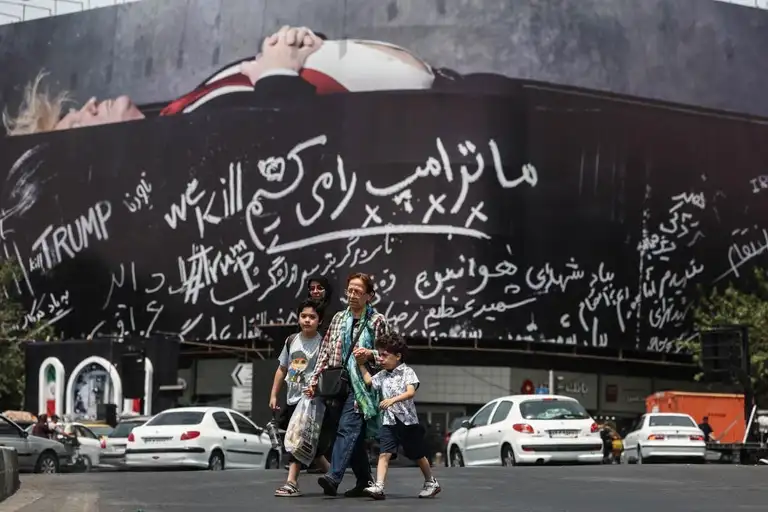
The suspension of US and Iranian attacks has revived hopes for diplomacy, but in Tehran the military lull has exposed a widening divide over whether the Islamic Republic should negotiate with Washington or press what hardliners see as a battlefield advantage.
Deputy Parliament Speaker Hamidreza Haji Babai made that resistance explicit on Monday, telling lawmakers that Iran would “never reach an understanding with the United States.”
“We should not allow America to wage war whenever it wants and declare a ceasefire whenever it wants,” he said during a virtual parliamentary session.
Former vice president Mohsen Mansouri, who served under the late President Ebrahim Raisi, voiced similar opposition in a social media post, arguing that Iran was discussing negotiations precisely when its military position had strengthened.
“We struck several ships, closed the strait and fought even harder than before. An arrow set Aramco ablaze, oil prices rose, and Iran’s power became more evident than ever,” he wrote.
“Why is it that just when our position is stronger and the enemy is more desperate, some immediately begin talking about negotiations, a ceasefire and reopening the strait?”
He added: “Do not restart this flawed cycle. The path to peace does not pass through negotiations and agreements. Struggle, jihad, vengeance and resistance are the road to peace.”
The hardline pushback comes despite mounting signs that indirect diplomacy has resumed.
President Donald Trump said Monday that Washington was engaged in “very serious negotiations” with Iran while warning the United States would resume “very powerful military action” if diplomacy failed.
According to Turkey’s Anadolu Agency, citing Pakistani sources, Pakistan and Qatar have intensified exchanges between Washington and Tehran.
The report said the mediators had proposed restoring the status quo that existed before July 9 through a two-week ceasefire, reopening maritime routes and resuming negotiations.
Iranian Foreign Ministry spokesman Esmaeil Baghaei confirmed in an interview with Austria’s ORF television that Iran and the United States were exchanging messages through intermediaries.
At his weekly press briefing on Monday, however, he denied that Tehran had requested negotiations, insisting Iran had only been discussing shipping arrangements in the Strait of Hormuz with Oman.
Baghaei also rejected reports of a proposed ceasefire, saying Iran “has never allowed, and will never allow, the United States to determine the timing of war and peace.”
Not everyone inside Iran shares the hardliners’ view.
The reformist newspaper Etemad argued Monday that recent developments marked a turning point, with military confrontation giving way to deterrence and renewed diplomacy.
Former diplomat Abdolreza Faraji Rad wrote in Arman Emrooz that several developments—including the suspension of US attacks and Trump’s latest remarks—suggested behind-the-scenes negotiations had either already produced results or were close to doing so.
He argued both sides still appeared to regard their earlier memorandum of understanding as valid.
Others dismissed that assessment.
Fada-Hossein Maleki, a member of parliament’s National Security and Foreign Policy Committee, told the Iranian Labour News Agency (ILNA) that the reduction in US military operations reflected the impact of Iranian attacks on American logistical and operational infrastructure rather than diplomatic contacts.
“Iran has entered the offensive phase,” he said. “In the offensive phase, there is certainly no discussion of negotiations.”
The United States halted its nightly strikes on Friday after nearly two weeks of attacks, while Iran has not launched further strikes on US bases in the region since shortly after Washington’s final operation.
Whether the lull develops into renewed diplomacy or merely precedes another round of fighting remains uncertain.
What has become increasingly clear, however, is that the military pause has opened a new political battle inside Tehran over whether Iran should negotiate from what some see as a position of strength or continue pressing its advantage on the battlefield.